


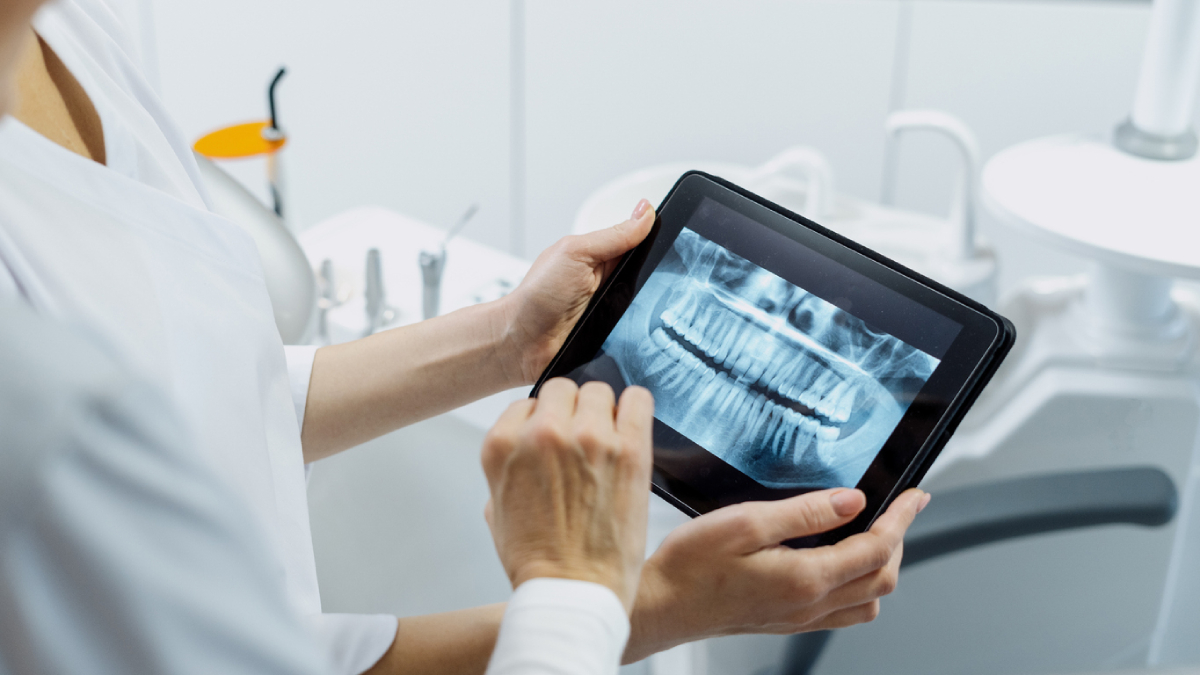
An X-ray is often a part of the routine examination of your oral health. But how often should you get a dental X-ray? In this article, we address this question and talk about the differences between a traditional X-ray and a digital dental X-ray. Additionally, we discuss other procedures that complement an oral examination.
How Often Should You Get a Dental X-Ray?
The frequency of dental X-rays often depends on a patient’s age and oral health condition:
- Adult patients with healthy teeth and gums are typically recommended to get X-rays every 1 to 2 years.
- Children and teenagers may be recommended to have X-rays more frequently (once a year), as their teeth and jaws are still developing, and cavities can develop more quickly.
- Individuals with a history of cavities, gum disease, or other dental issues may require more frequent X-rays, sometimes every 6 to 12 months, particularly if they have ongoing oral health concerns.
Why Are Dental X-Rays Important?
Sometimes, infections in the mouth can go unnoticed because you do not experience any pain or discomfort until the problem becomes severe. X-rays allow dentists to see complications not visible during a visual exam, such as:
- Decay between teeth
- Infections or abscesses at the root of a tooth
- Jawbone density loss or damage due to gum disease
- Developmental issues or impacted teeth (teeth hidden underneath the gumline)
- Cysts or tumors
What Is the Difference Between a Traditional X-Ray and a Digital X-Ray?
Traditional X-rays use photographic film to produce images, while digital X-rays utilize electronic sensors. The processing time of a traditional X-ray is longer (several minutes), but the results of a digital X-ray can be displayed on a screen immediately.
One of the most significant advantages of a digital X-ray is that it exposes patients to up to 90% less radiation, compared to a traditional X-ray. At the same time, the resolution of a digital X-ray is higher, and the picture can be enlarged for better analysis.
Another pleasant advantage of a digital X-ray is that it is more eco-friendly than the traditional method, as it involves no chemicals in the development process and generates no physical waste.
Other Procedures to Have with an Oral Exam
Visual oral exams and X-rays are crucial for identifying potential issues in a timely manner. As we mentioned before, X-rays are typically done every 1 to 2 years, while visual oral exams are recommended every 6 months.
It is a good practice to combine your exams with professional dental cleanings and fluoride treatments. During a cleaning, your dentist removes plaque and tartar that accumulate on the teeth over time. These substances are acidic and filled with bacteria, destroying the teeth’s enamel and leading to cavities and gum disease. Additionally, bacterial infections in the mouth can lead to general health issues, including lung and heart problems, which can reduce your energy levels and overall quality of life.
Fluoride treatments (which use more potent solutions compared to over-the-counter products) remineralize the enamel, making it more resilient to bacteria in the long run and helping reduce their growth in the mouth.
Thus, biyearly cleanings and fluoride treatments, done in conjunction with oral exams, will reduce your risk of oral health problems and need for more complicated, costly treatments.
Get an Oral Exam at Santa Ana Magic Smile
Preventive dentistry, which includes exams, cleanings, and fluoride treatments, helps improve and preserve oral health for years to come. Do not hesitate to schedule an appointment with an experienced dentist and the Santa Ana Magic Smile office today. We look forward to your visit.