


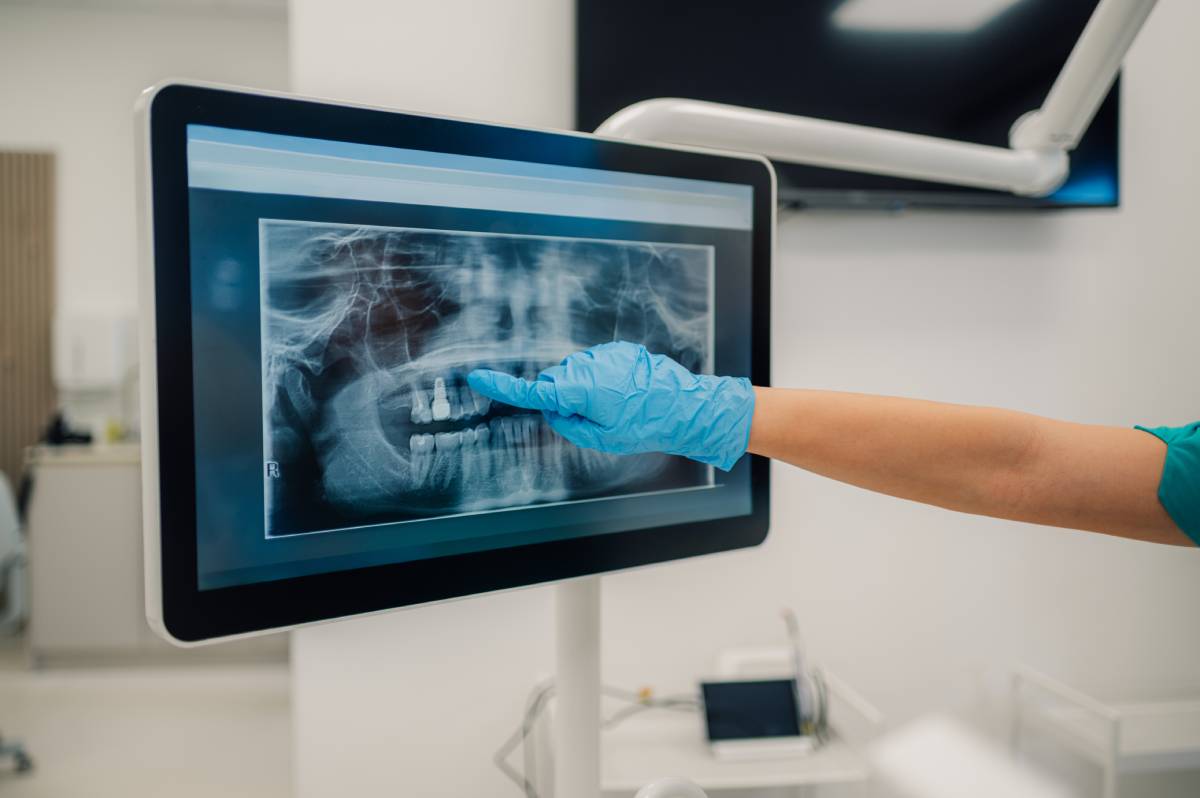
One of the greatest advantages of keeping regular visits with your dentist is their ability to detect cavities early with dental x-rays. Advanced technology allows your dentist to find cavities efficiently, especially those between your teeth or beneath the surface, where they aren’t visible during a regular exam. Your dental team can identify tooth decay in its earliest stages, many times before you experience any pain or discomfort or see any visible damage. Early detection typically equates to easier solutions, less expensive treatments, and better chances of saving your natural teeth. Below, we dive into how digital x-rays detect cavities early.
What Are Digital X-Rays
One of the first things that is likely to happen during your appointment is having digital x-rays taken. The modern world has gone digital in most things, x-rays included. Digital x-rays are just as they sound; x-ray sensitive plates are used to capture the data and immediately transfer it to a computer system without the need for a transition step. This means physicians get necessary imaging quickly, making them an asset in emergency medicine, especially. Digital radiography implements a digital image capture device, which allows for immediate availability and the elimination of film processing costs.
How Digital X-Rays Detect Cavities Early
The technology behind digital x-rays works by emitting a small beam of radiation through your teeth into a special sensor. You’ve seen the black and white images at your dentist office before, healthy tooth enamel makes up the bright white parts of the x-ray because their density blocks radiation. Those darker, shadowy areas, especially between your teeth, are areas of weakness due to decay. Digital format allows your dentist to view these areas of structural breakdown instantly, get a closer look at problem areas, and adjust brightness to improve detail.
Can Digital X-Rays Spot More Than Cavities?
Another reason digital x-rays are one of dental health care’s greatest tools is that they can detect more than just cavities. They can reveal gum disease-related bone loss. X-rays can also indicate the presence of infections and abscesses prior to feeling any discomfort or swelling. They are used to look for impacted wisdom teeth, spot cysts or tumors, as well as jaw fractures or injuries. To say digital x-rays are a benefit to dental patients is an understatement. Early intervention means better outcomes in every aspect.
Advantages
Digital x-rays have countless advantages for patients:
- Instant results
- Better image quality
- Easy to adjust
- Environmentally friendly
- Easy to store and share
- Catches problems early
- Saves time
- Better monitoring.
- Safety
Safety is always a concern when discussing radiation. The safety of digital x-rays is proven to be considered generally safe to most patients. Your dentist will discuss with you any concerns related to radiation. X-ray machines are designed to send targeted beams to a specific tooth region, with most dentists requiring patients to wear lead aprons to shield unnecessary areas from scattered radiation. It is important you choose a dentist experienced in the use of digital x-rays. Research suggests the minute amount of radiation you receive from dental x-rays is worth the risk when it could catch serious problems early.
Digital X-Rays and Your Dental Health
Dental care experienced great technological advancement with the creation of digital x-rays by making cavity detection safer, faster, and more accurate than previous years. Cavities can be spotted in their earliest stages, reducing the need for aggressive treatments, financial burden, and potential loss of natural teeth. One of the first things you notice about a person is their teeth, digital x-rays can help you remain memorable for your perfect teeth rather than your missing teeth.
CTA: Catch cavities early and save your teeth. Schedule a consultation with us today.
Reference: Wikipedia. (2025). Digital Radiography.